
Security professionals often assume that increasing the number of guards, cameras, and personnel automatically reduces the likelihood of crime. It seems logical—the more protection there is, the safer an environment should become.
However, criminology teaches us that human behaviour is rarely that straightforward.
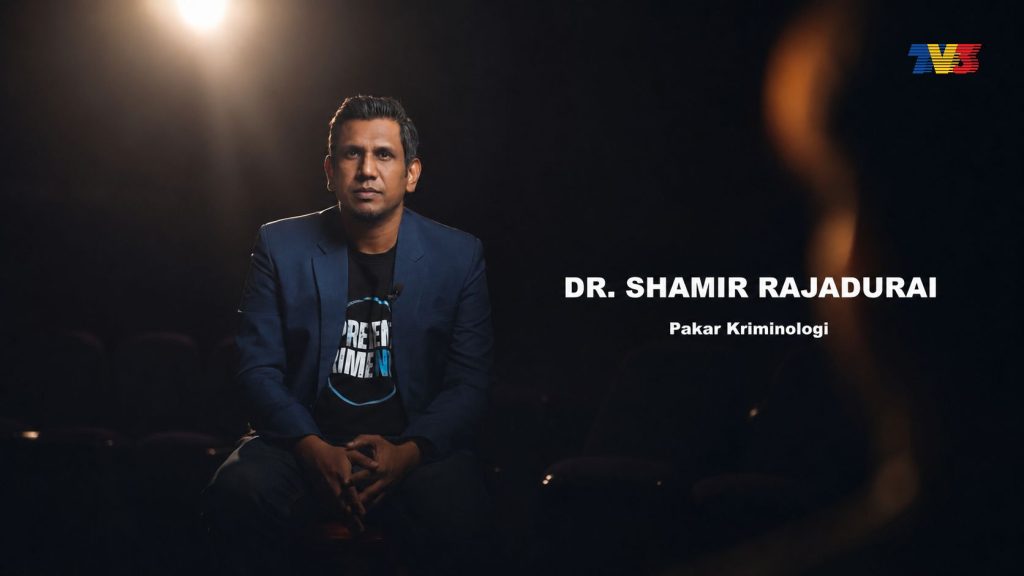
In a recent discussion on TV3’s Fail Mahkamah, I examined a high-profile assassination at KLIA2 that challenged one of the most fundamental theories in criminology. More importantly, it demonstrated how sophisticated offenders don’t simply break security—they understand it well enough to exploit its weaknesses.
The Foundation of Crime: Routine Activities Theory
One of the most influential theories in modern criminology is Routine Activities Theory, developed by criminologists Lawrence E. Cohen and Marcus Felson.
According to the theory, three conditions must exist simultaneously for a crime to occur:
- A motivated offender
- A suitable target
- The absence of a capable guardian
Remove any one of these elements, and the opportunity for crime is significantly reduced.
For decades, this framework has helped law enforcement agencies, security professionals, urban planners, and criminologists understand why crimes happen in certain places and not others.
The third element—the presence of a capable guardian—is often considered one of the strongest deterrents.
A capable guardian may be:
- Security officers
- Police personnel
- CCTV surveillance
- Employees
- Members of the public
- Access control systems
- Anyone whose presence increases the perceived risk of being caught
On paper, locations such as airports should be among the safest environments imaginable.
Which raises an important question.
Why Would Criminals Choose an Airport?
An international airport is one of the most heavily protected public spaces in the country.
Security personnel are stationed throughout the facility.
Law enforcement officers patrol continuously.
Thousands of travellers, employees, and surveillance systems create constant activity.
By the logic of Routine Activities Theory, this should be one of the least attractive places to commit a serious crime.
Yet, in the KLIA2 assassination case, the perpetrators selected exactly that environment.
Why?
Because they understood something that many people overlook.
When Everyone Is Watching, No One Is Watching
The offenders did not disprove Routine Activities Theory.
They discovered a vulnerability within how guardianship functions in highly populated environments.
This concept closely resembles the psychological phenomenon known as diffusion of responsibility, made widely known through discussions surrounding the Kitty Genovese case.
Diffusion of responsibility occurs when responsibility is shared among a large number of people.
Instead of increasing accountability, it often decreases it.
People unconsciously assume:
- Someone else has already noticed.
- Someone else will intervene.
- Someone else is responsible.
- Someone else is monitoring the situation.
As responsibility becomes distributed across hundreds of individuals, personal ownership diminishes.
Ironically, an environment filled with guardians can begin to function as though there are none.
The Invisible Weakness in High-Security Environments
Many organisations focus heavily on visible security.
More guards.
More cameras.
More checkpoints.
More personnel.
These measures certainly have value.
However, security is not measured solely by quantity.
It is measured by clarity of responsibility.
If everyone assumes someone else is paying attention, small warning signs may go unnoticed.
Suspicious behaviour becomes ordinary.
Unusual movements blend into routine activity.
Potential threats disappear into the background noise.
Security becomes invisible—not because it is absent, but because it is spread too thin across too many observers.
Opportunistic Crime vs. Engineered Crime
This case also illustrates an important distinction between two different types of offenders.
Opportunistic Crime
Most crimes occur because offenders encounter an unexpected opportunity.
An unlocked door.
A distracted victim.
Poor lighting.
Limited surveillance.
The offender reacts to circumstances.
Engineered Crime
Engineered crime is different.
The offender carefully studies the environment beforehand.
They analyse procedures.
They observe human behaviour.
They understand security routines.
They identify assumptions.
Then they design their actions around those observations.
Rather than avoiding security, they use predictable security behaviour to their advantage.
This level of planning is what separates sophisticated offenders from ordinary criminals.
Lessons for Security Professionals
The KLIA2 case provides valuable lessons for organisations responsible for protecting people, infrastructure, and public spaces.
Effective security requires more than visible resources.
It requires clearly defined responsibility.
Security teams should regularly ask:
- Who is actually responsible for observing suspicious behaviour?
- Are responsibilities clearly assigned or merely assumed?
- Do multiple layers of security create accountability—or confusion?
- Are personnel empowered to intervene, or do they expect someone else to act?
- Could our busiest operational periods actually become our most vulnerable?
These questions are just as important as investing in technology or increasing manpower.
Crime Prevention Requires Understanding Human Behaviour
As a criminologist, I have spent years interviewing offenders, studying criminal decision-making, and analysing why people commit crimes in specific environments.
Again and again, one lesson emerges.
Criminals are not always looking for places with no security.
They are looking for environments where security becomes predictable, distracted, or psychologically ineffective.
Understanding offender behaviour allows organisations to identify vulnerabilities before criminals do.
That is the foundation of effective crime prevention.
Final Thoughts
The assassination at KLIA2 serves as a reminder that effective security is not simply about having more people, more cameras, or more visible protection.
It is about ensuring that responsibility remains clear, vigilance remains active, and human behaviour is understood as deeply as physical security systems.
In criminology, the most dangerous vulnerabilities are often not the ones we can see—they are the assumptions we make.
Sophisticated offenders understand those assumptions.
The question every organisation should ask is:
Do we?
About the Author
Shamir is a criminologist and crime prevention specialist with extensive experience in offender behaviour, fraud, security risk assessment, and Crime Prevention Through Environmental Design (CPTED). Having interviewed real offenders and studied how criminals identify opportunities, he helps organisations, government agencies, property developers, architects, and security professionals strengthen their environments by understanding crime from the offender’s perspective.
His expertise spans environmental criminology, fraud prevention, security strategy, and behavioural analysis, enabling clients to identify vulnerabilities before they are exploited.
If you are looking to assess your organisation, facility, or public space through the lens of modern criminology and offender decision-making, Shamir provides evidence-based insights that go beyond traditional security measures.
Contact Shamir
Email: shamir@preventcrimenow.com
Phone: +60 14-905 3442