
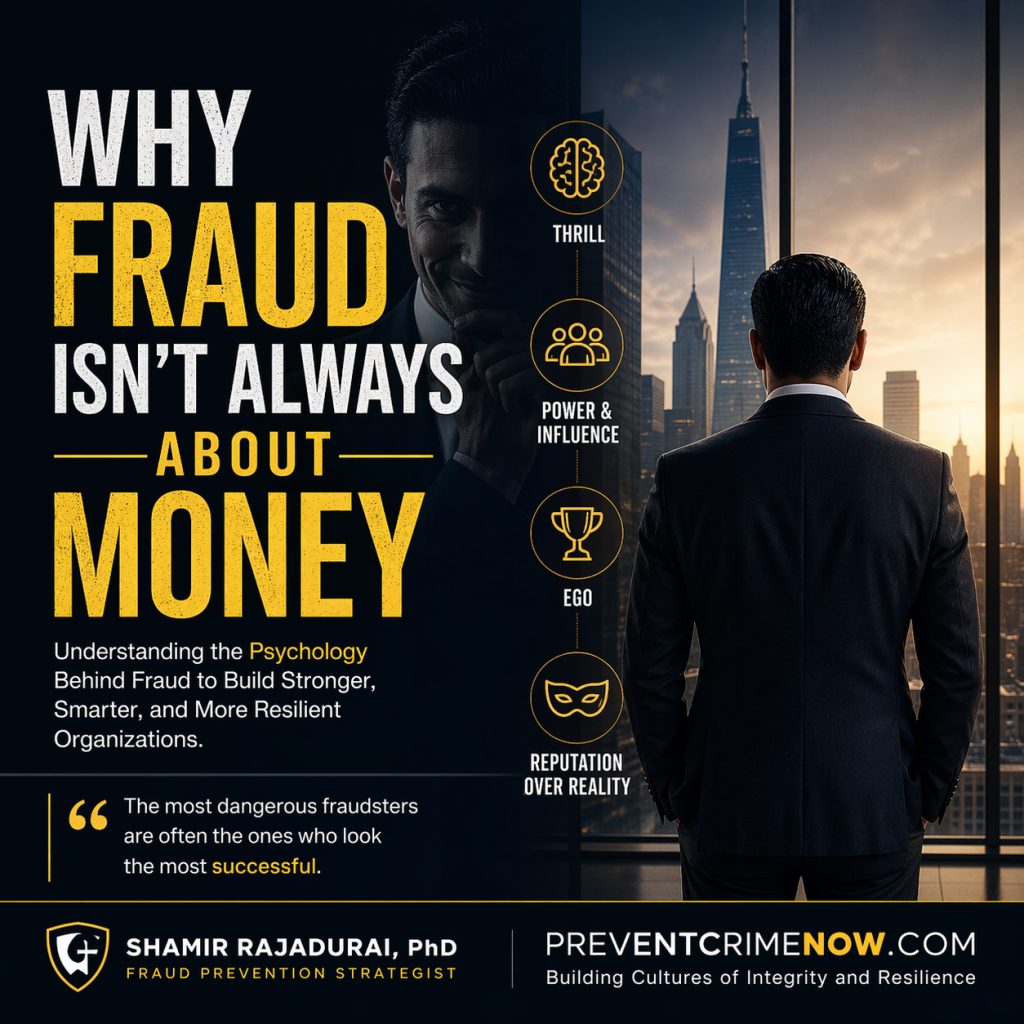
Most people assume that fraud is driven purely by financial gain. It’s a logical conclusion—after all, money is often at the center of these crimes. But after years of studying fraudsters and engaging them in direct conversations, a different picture emerges—one that challenges conventional thinking.
Yes, money plays a role. But more often than not, it’s not the primary motivation. Instead, it becomes a by-product of something far more complex and deeply psychological.
The Thrill of Outsmarting the System
For some individuals, fraud is less about financial reward and more about the challenge. Imagine discovering a loophole within a large organization—navigating past compliance teams, auditors, and risk controls without detection. The sense of achievement can be intoxicating.
This mindset mirrors that of hackers who breach “secure” systems—not necessarily for what they gain, but for the validation that they can. The success lies in proving their intelligence and capability, not just in the outcome.
Power, Influence, and Social Elevation
For others, fraud becomes a tool for transformation. Money, in this context, is a gateway to power and influence. It changes how others perceive and interact with them.
With wealth comes access—new social circles, elevated status, and admiration. Rarely do people question the origins of success when it appears convincing. Fraud, therefore, becomes a vehicle for creating an identity that their legitimate income could never support.
They’re not just stealing money—they’re buying a version of themselves.
Reputation and Ego: The Hidden Drivers
Within certain circles, successful fraudsters aren’t viewed as criminals. They’re seen as clever, strategic, even admirable. Pulling off a major scheme without getting caught can elevate their reputation among peers.
This recognition feeds the ego, which in turn fuels riskier behavior. The cycle escalates—bigger frauds, higher stakes, and a growing sense of invincibility.
Why Traditional Fraud Training Falls Short
Most fraud prevention programs focus heavily on policies, procedures, and identifying red flags. While these are essential, they often miss a critical component: understanding why people commit fraud.
Without this psychological insight, organizations remain reactive rather than proactive.
Fraudsters are rarely the individuals who appear desperate or struggling. More often, they are:
- Confident
- Well-connected
- Outwardly successful
In many cases, they embody the very qualities organizations value and reward.
And that’s precisely what makes them difficult to detect.
Rethinking Fraud Prevention
If organizations want to stay ahead, they must shift their perspective. Fraud prevention is not just about identifying risk—it’s about understanding human behavior.
It requires asking deeper questions:
- What motivates individuals beyond financial need?
- How does organizational culture influence ethical decision-making?
- Are we placing too much trust in appearances?
Because the real risk isn’t always the person who looks like they’re struggling.
Sometimes, it’s the one who looks like they’re winning—at your expense.
Contact Us Today
Ready to strengthen your organization’s approach to fraud prevention?
Schedule a 15-minute Zoom call today.
Malaysia
📞 +6014-905 3442
📧 shamir@preventcrimenow.com
Let’s start a conversation about building smarter, more resilient systems—grounded not just in policy, but in psychology.