
By Dr. Shamir Rajadurai | Fraud Prevention Strategist
People often use the terms psychopath and sociopath interchangeably. In everyday conversation, they’ve become shorthand for “dangerous” or “manipulative.”
But after years of sitting across from individuals who fall into both categories, one thing becomes very clear:
They are not the same.
And misunderstanding that difference can cost organizations more than they realize.
What Is a Psychopath?
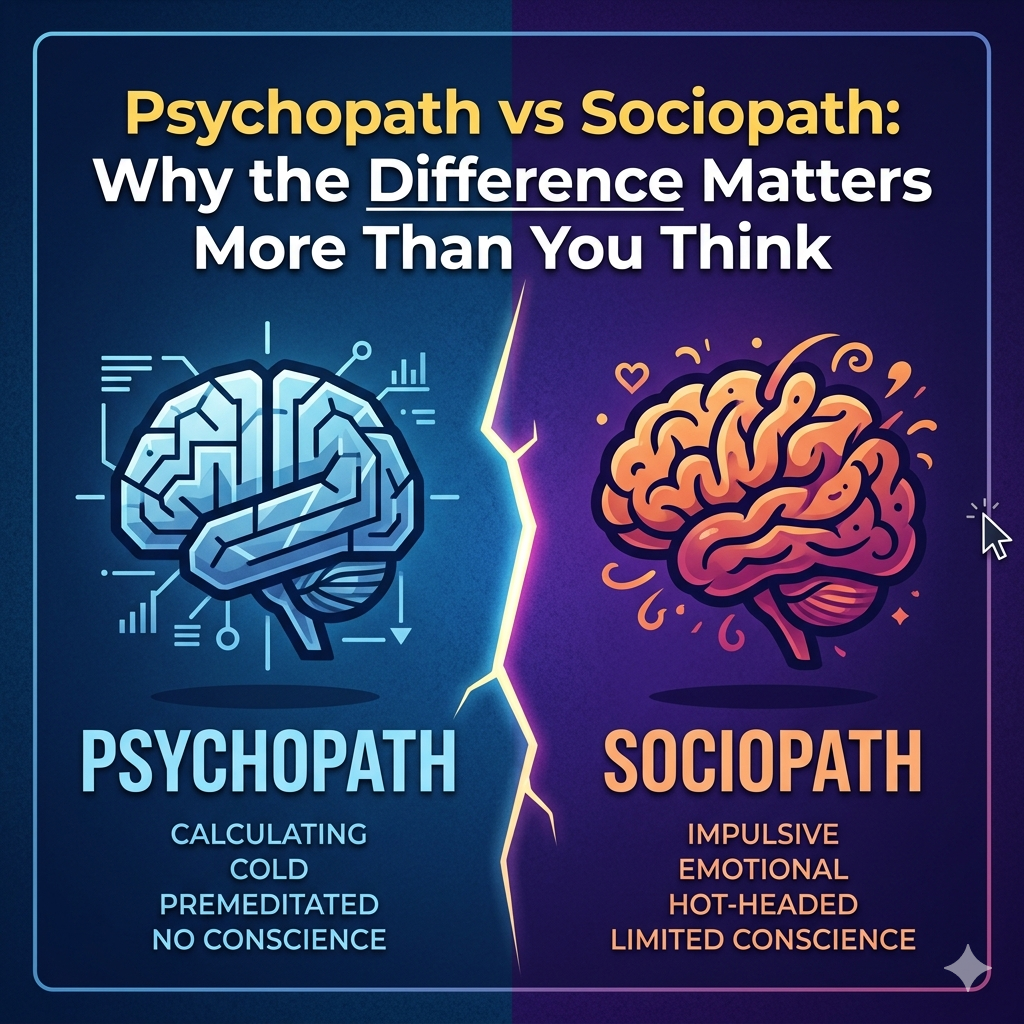
A psychopath is typically characterized by a lack of emotional depth. They do not experience genuine empathy, guilt, or remorse in the way most people do.
What makes them particularly dangerous is not just what they lack—but what they can convincingly imitate.
They are often:
- Highly charming
- Calculated and strategic
- Emotionally controlled
- Skilled at mimicking normal human responses
They can sit across from you in a boardroom, lead teams, build trust—and never reveal their true nature.
That’s what makes them so effective in high-stakes environments, including corporate settings.
What Is a Sociopath?
A sociopath, on the other hand, is shaped more by environment than wiring.
Their behavior is often linked to:
- Trauma
- Abuse
- Neglect
- Chaotic or unstable upbringing
Unlike psychopaths, sociopaths may have some emotional capacity—but it is inconsistent and often unstable.
They tend to be:
- More impulsive
- Emotionally reactive
- Less predictable
- Poorer at maintaining long-term deception
While they can still cause harm, they are generally easier to identify due to their erratic behavior patterns.
The Critical Insight Most People Miss
Here’s where it gets interesting:
“Psychopath” and “sociopath” are not official clinical diagnoses.
They are informal labels often used to describe a range of behaviors that fall under antisocial personality traits.
In reality, what we’re dealing with is a spectrum—not two clearly defined boxes.
And when organizations oversimplify this, they miss the real warning signs.
Why This Matters in the Workplace
Most corporate training programs focus on obvious red flags—conflict, aggression, underperformance.
But the real risk often comes from the opposite profile.
The individual who is:
- Confident
- Well-spoken
- Socially intelligent
- Seen as leadership material
Especially in cases involving psychopathic traits, the person who appears the most composed and capable may also be the most calculated.
And that’s exactly what makes them hard to detect.
Rethinking Risk and Human Behavior
If you want to strengthen your organization against internal threats, you need to move beyond labels.
Understanding behavior—especially at the psychological level—is what creates real resilience.
Because the biggest mistake you can make is assuming risk looks obvious.
Often, it looks like success.
Work With Dr. Shamir Rajadurai
Dr. Shamir Rajadurai is a leading fraud prevention strategist specializing in criminal psychology, corporate risk, and behavioral analysis. Through real-world insights and direct engagement with offenders, he helps organizations identify risks others miss.
🌐 Website: www.preventcrimenow.com
📧 Email: shamir@preventcrimenow.com
📞 Malaysia: +6014-905 3442
Book a 15-Minute Consultation
If you’re serious about strengthening your organization’s defenses against fraud and behavioral risk:
Book a 15-minute Zoom consultation today.
Discover how understanding psychology—not just policy—can transform your approach to risk management.
Final Thought
When we reduce complex human behavior into simple labels, we create blind spots.
And in the world of fraud and corporate risk…
Blind spots are where the real danger lives.